A business card website is a small website of one to five pages that briefly tells people about you: who you are, what you do, how much it costs and how to reach you. Like a paper business card, only with photos, work samples, reviews and a request form. For many specialists and small companies it is the best start: quick, inexpensive and enough for customers to find you on Google and trust you.
What a business card website is and how it differs from other websites
Several similar formats get confused on the market. Here is how they differ:
| Format | Pages | Goal |
|---|---|---|
| Business card website | 1–5 | Tell people about you and give your contacts |
| Landing page | 1 | Sell one service or product for an ad campaign |
| Corporate website | 10+ | Present the company, services and blog in full |
| Online store | dozens to hundreds | Sell products with a cart and payment |
The main difference between a business card website and a landing page is the goal. A landing page "pushes" towards one action and usually lives for an ad campaign. A business card website calmly tells people about you in general and works for years.
Who a business card website is enough for
A business card website is a good choice if you are:
- a specialist working alone: a lawyer, psychologist, photographer, tutor, translator, craftsperson;
- a small local business: a coffee shop, salon, car service, yoga studio;
- a non-profit or initiative that needs a clear page for donors and partners;
- a start-up or a new line of business that wants to appear online quickly and test demand.
What they all have in common: few services, a relatively simple sales process and the need to look reliable when a customer "googles" you after a recommendation.
When a business card website is not enough
Think about a bigger website right away if:
- you have more than five or six separate services, each with its own audience;
- you want customers from Google for many different queries — that requires separate pages and a blog;
- you sell products online;
- you need user accounts, booking, payment or a calculator.
The good news: a business card website can grow. If it is built on a proper CMS, new pages, a blog or a catalogue can be added later without starting from scratch.
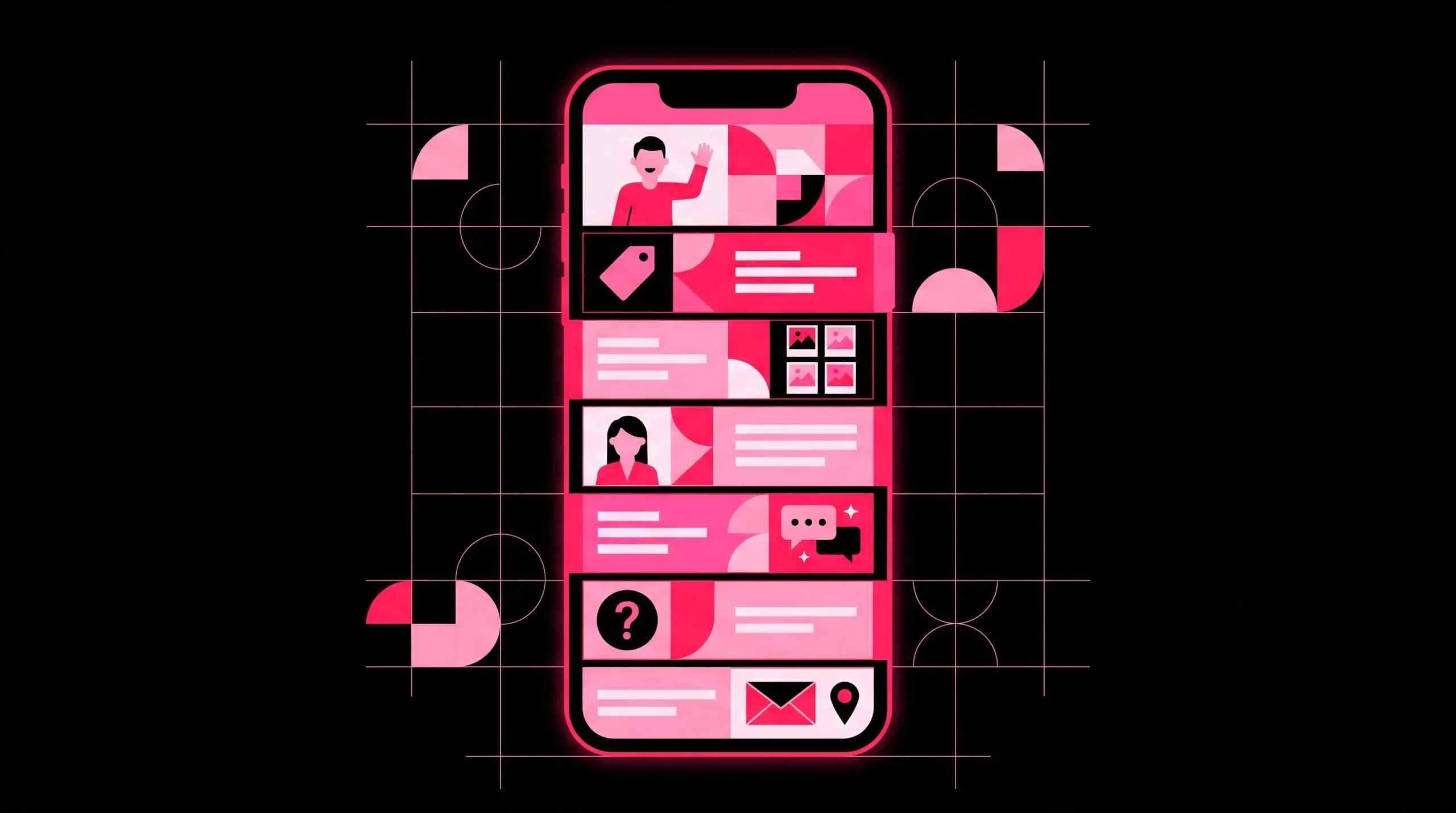
Seven blocks a business card website must have
1. The first screen: who you are and how you help
One sentence that explains what you do and for whom. Not "Welcome" but "Bookkeeping for sole traders in Kyiv — no fines and no queues." Next to it — an action button: "Book", "Get a consultation".
2. Services and prices
Briefly, point by point. Prices "from" are better than "price on request": people want to know whether you fit their budget before they get in touch.
3. Work or results
A portfolio, case studies, before-and-after photos, numbers. Even three or four examples convince more than any description.
4. About you
Photos of people, a short story, experience. People buy from people — especially from specialists.
5. Reviews
Real ones, with names and, if possible, links to the customers' social media. Screenshots from messengers work too.
6. FAQ
Five to seven answers to what customers ask most often: timelines, payment, guarantees, how it all works. This removes doubts and reduces the number of repeated questions.
7. Contacts and a request form
Phone, messengers, e-mail, an address with a map, opening hours. And always a simple form: name, contact, message. Not everyone wants to call — some can't, some don't like to. A written way to get in touch makes you accessible to everyone.
What else to do so the website brings customers
- Connect a domain with your brand name, not a free website-builder address. It's a matter of trust.
- Set up the SEO basics: a title and description for each page, the city name in the text if you work locally.
- Create a Google Maps profile and link to it from the website — for a local business this is often the main source of customers.
- Take care of mobile: most visitors will come from a smartphone. Buttons should be large, text readable without zooming.
- Check the speed. A business card website should open in one to two seconds. If it's slow, huge photos are usually to blame.
Five mistakes that stop a business card website from working
- No prices. People don't know whether they can afford you and go where prices are visible. Even a "from–to" range is better than silence.
- Only a phone number. Some customers don't call: it's awkward at work, they feel shy, they can't hear. A messenger and a request form increase the number of enquiries.
- The website hasn't been updated for years. Old prices, expired offers, three-year-old "news" — and the customer wonders whether you are still in business.
- Stock photos. Smiling models in an office you don't have create distrust. Real photos of the team, the premises and your work are stronger, even if shot on a phone.
- No legal page. If the website collects names and phone numbers, you need a privacy policy — people feel safer, and search engines value it.
How much a business card website costs
The price depends on the number of pages, the design and who prepares the texts and photos. Benchmarks:
- a website builder and a DIY template — from a few dollars a month for a subscription, but the design will look like thousands of others;
- a business card website from a studio with a custom design — at QD from about $330 (UAH 15,000); you can get a more precise figure in the calculator;
- yearly costs — domain and hosting, usually under $100 a year together.
More about prices for different types of websites in the article "How much does website development cost in Ukraine". And how the work goes from request to launch — in "Website development stages".
In short
A business card website is not a "lesser website" but the right tool for specialists and small businesses. It doesn't need a big budget, launches quickly and gives what a social media page lacks: your own address, full control and visibility in search. Seven blocks — first screen, services, work, about you, reviews, FAQ and contacts — cover everything a customer wants to know before getting in touch. Want a website like this? See how we build websites or write to us.