Many entrepreneurs think that branding for business is expensive, slow and "for corporations". So at the start they order a logo from a friend, choose colours "to look nice" and come back to the question a few years later, when the style no longer matches the level of the company. Here is how to do it right the first time — even on a small budget.
A brand is more than a logo
A logo is only the visible part of a brand. The brand itself is the image of your company in the customer's mind: what they think about you, what they feel, why they choose you. Branding is the work of making that image exactly what you intended.
Branding includes:
- positioning — who you are, who you serve and how you are different;
- name and brand voice — how you sound in your texts;
- identity (visual style) — logo, colours, fonts, graphics;
- touchpoints — website, social media, packaging, signage, documents;
- a brand book — the rules for using all of this.
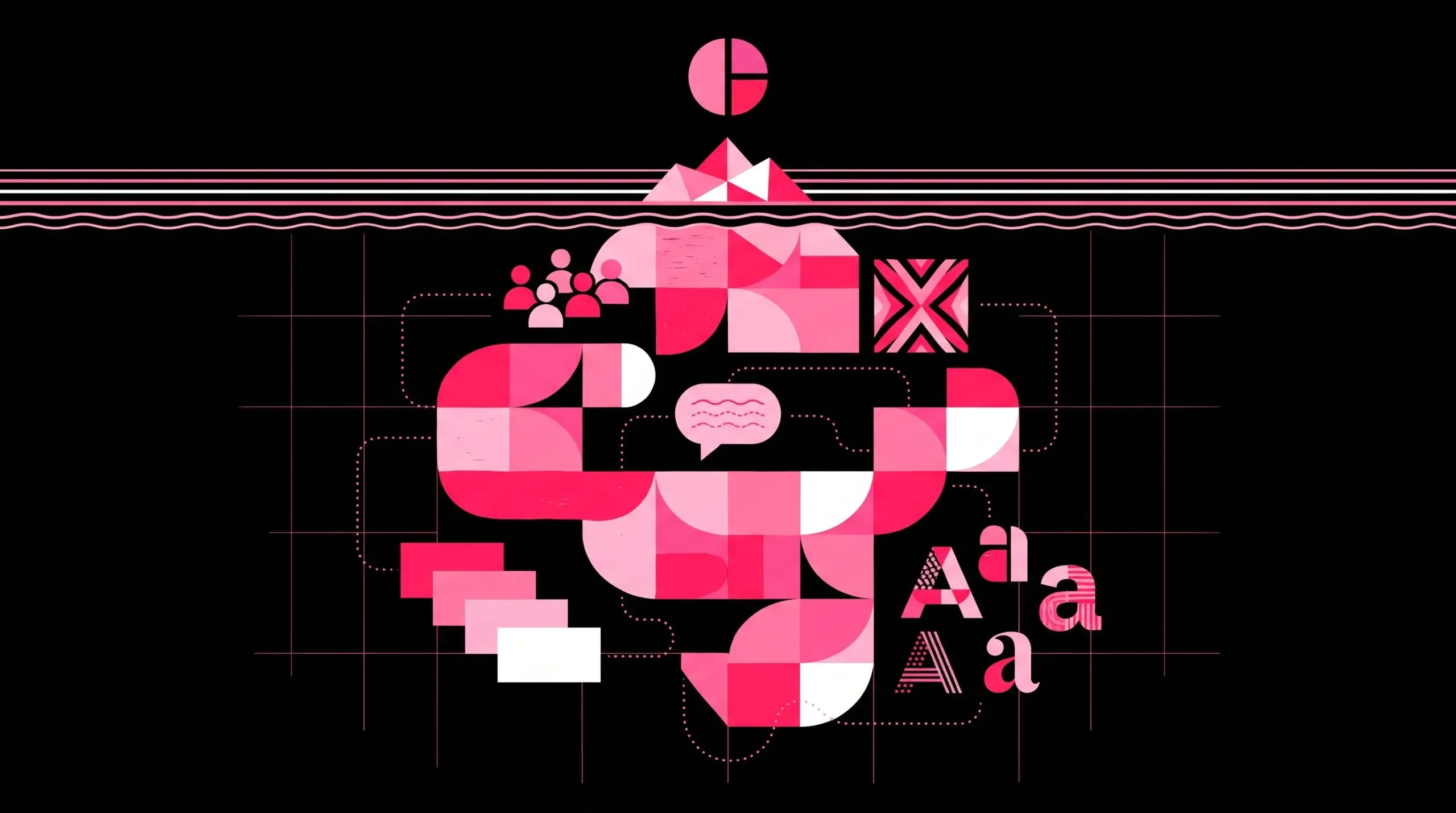
7 steps of branding for a small business
Step 1. Positioning
Put it in one sentence: what you do, for whom and how you are different. For example: "A coffee shop by the metro where you can get coffee to go in 2 minutes." Without this sentence any logo is just a picture.
Step 2. Audience
Describe 2–3 typical customers: age, habits, what matters to them, where they look for businesses like yours. A brand for students and a brand for lawyers will look completely different.
Step 3. Competitors
Collect the logos, websites and social media of 5–10 competitors. See which colours and styles repeat. Your task is not to blend in with them but to find your own niche.
Step 4. Name and voice
The name should be easy to read, pronounce and remember. Check whether the domain and social media handles are free. The brand voice is how you write: informal or formal, with humour or strictly, briefly or in detail.
Step 5. Logo
A good logo:
- reads at a small size — in a browser favicon or an avatar;
- works in one colour — on black, on white, on a photo;
- has several versions — horizontal, vertical, a mark without text;
- does not depend on trends that will date within a year.
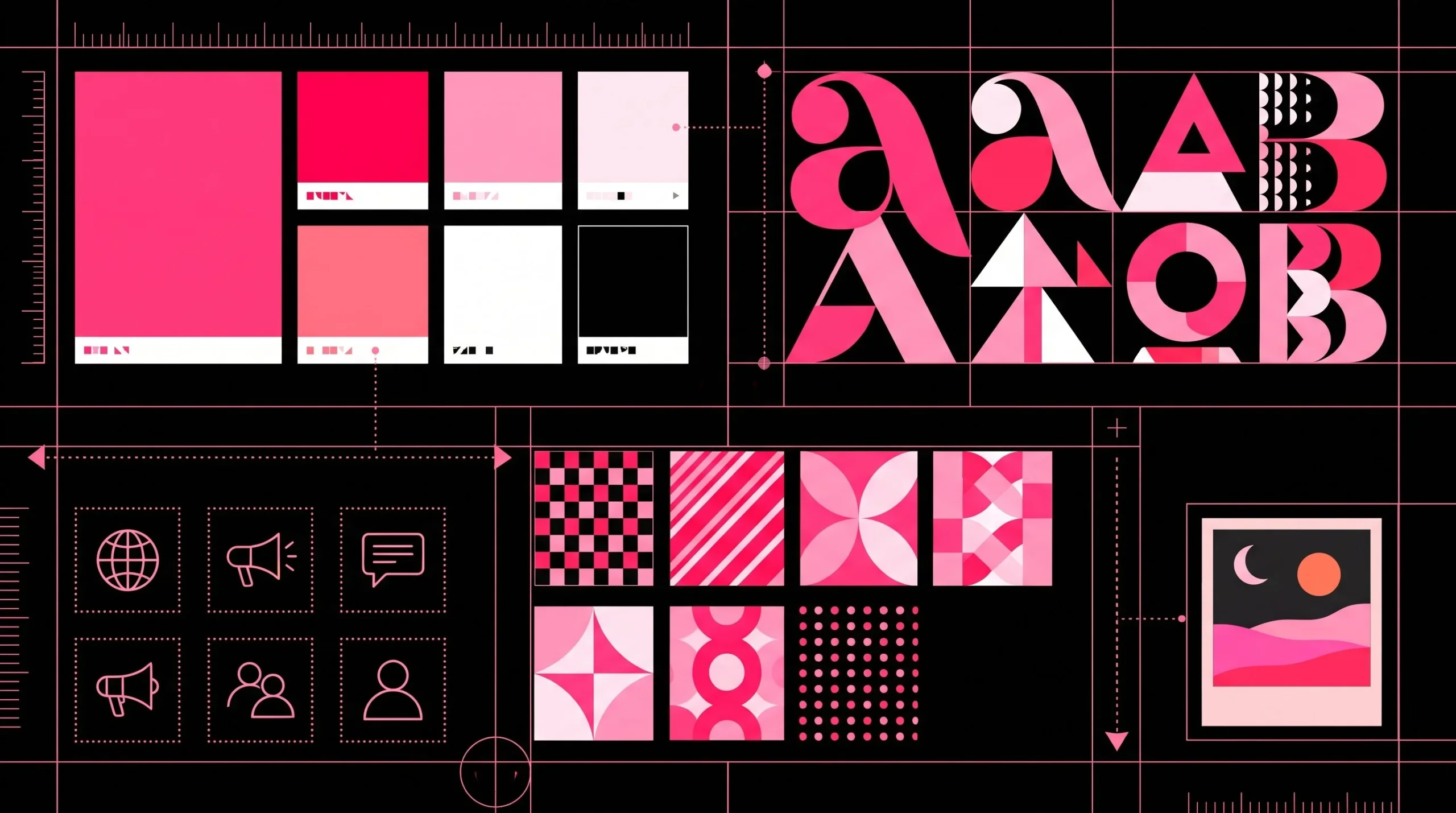
Step 6. Visual identity
Identity is a system that makes all your materials recognisable:
- colours — primary and secondary, with exact codes for print and web;
- fonts — they must support every language you use (for us, Cyrillic as well as Latin);
- graphic elements — patterns, icons, the style of photos and illustrations.
Our tip: check colour contrast already at the identity stage. Delicate grey text on white looks stylish in a presentation but is hard to read on a website — especially for people with low vision. More in the article about website accessibility.
Step 7. A brand book or guide
Even a small 5–10 page guide saves time and money: the social media designer, the print shop or the website developer see the rules and don't invent "their own version" of the logo.
The minimum branding kit for a start
| What | Why | Priority |
|---|---|---|
| Positioning | The basis of all decisions | Must have |
| Logo in several versions | Recognisable everywhere | Must have |
| Colours and fonts | A consistent look | Must have |
| Social media templates | Regular content without chaos | Recommended |
| Business cards, letterheads | Offline contacts | If needed |
| A full brand book | Working with several contractors | When the business grows |
Common mistakes
- Starting with the logo instead of positioning.
- Copying the market leader — customers will see you as a cheaper copy.
- Choosing a style "to your own taste" rather than for your audience.
- Not getting the source files — later you have to redraw the logo for a sign.
- Changing the style every year — recognition is built over years of consistency.
How long branding takes
It depends on the scope. A logo and basic style for a small business is a few weeks of work, including discussions and revisions. A full brand with research, naming and a brand book takes longer. The exact schedule should always be fixed in the contract.
Branding at QD
We do branding for new businesses, for companies that have outgrown their old style and for non-profits. Our work includes the identity for the Chuiu Sertsem foundation, the UASLT association and the FC MILAN football club. The service page has three formats: from a starter logo to a turnkey brand.
Send us a request — we will discuss your business and suggest which step to start with.